
Overview: The Journey in One Glance
This is a step-by-step guide to moving a dog from Ireland to California by air cargo. We moved a medium-sized mixed-breed dog (a cockapoo, around 18 kg / 40 lb by age two) from Ireland to California at the end of the COVID-19 pandemic. The dog had originally lived with my mum in Northern Ireland, but he had simply grown too strong for her to manage safely. Rather than rehome him with strangers, we decided to bring him to the United States.
At a high level, we needed to satisfy three main sets of rules on the U.S. side:
- CDC – U.S. public health requirements for dogs entering the country (especially rabies).
- USDA/APHIS – U.S. Department of Agriculture rules and paperwork for pet import.
- California state – state-level rules for bringing a dog into California.
On the departure side, we also had to align with Irish and UK rules for exporting a pet and with our chosen airline’s own policies for dogs travelling as freight. Ireland’s status as a country without dog rabies or screwworm, and the fact that the dog had never left Ireland/Northern Ireland, simplified some aspects of the paperwork but did not remove the need for careful documentation.
Timeline: From First Vet Contact to Landing in California
Here’s the rough timeline that worked for us. Your exact dates will depend on vaccine timing, flight availability, and how quickly you can find a vet who is comfortable handling export paperwork and coordinating with the airline.
- T − 8–12 weeks: Confirm eligibility, read official rules, find a vet willing to handle export.
- T − 6–8 weeks: Ensure microchip and rabies vaccination status meet U.S. entry rules.
- T − 4–6 weeks: Choose airline and route, book the dog’s space as cargo/freight.
- T − 1–2 weeks: Final health check, any required parasite treatments, crate acclimatisation.
- T − 24–48 hours: Vet completes and signs the official health certificate and export paperwork.
- Travel day: Dog checked in with the airline’s cargo facility; you fly separately to meet them in California.
- Arrival: Clear customs and any inspections at the cargo terminal; bring the dog home.
In our case, the most stressful part of this timeline was not the flight itself, but finding a vet who would take responsibility for the export process and align the final exam, vaccines, and paperwork with the narrow time windows required by authorities and the airline.
Paperwork and Health Requirements
This is the part that causes the most anxiety. The key is to work from official sources and then confirm details with your vet and airline, rather than relying only on forums or hearsay.
1. Understanding CDC, USDA, and California Requirements
For our move, we started by reading the official rules and then summarising them in a short note for our vet. We highlighted three pillars on the U.S. side:
- CDC guidance on bringing dogs into the United States .
- USDA APHIS information on pet dogs entering the U.S. from another country .
- California state rules on importing dogs (essentially requiring that dogs be healthy and currently vaccinated against rabies, often with a recent health certificate).
Ireland’s status as a country without dog rabies and screwworm, and the fact that our dog had never left Ireland or Northern Ireland, meant we could honestly state that he had not been in any high-risk country in the previous six months. That simplified some conditions, but we still needed a clear paper trail to prove it.
2. Microchip and Rabies Vaccination
Our dog was already microchipped and vaccinated in Ireland, which made basic identification and record-keeping straightforward. In practice, the part that really mattered for U.S. entry in our case was being able to show a clear rabies vaccination history tied to this specific dog, and to confirm that he had only ever lived in Ireland and Northern Ireland (both treated as low risk for dog rabies).
- His existing microchip number appeared on his veterinary records and paperwork.
- His rabies vaccine was still valid on the date of arrival in the U.S., with date and batch number recorded.
- Other routine vaccines were up to date, even if not strictly required by U.S. border rules.
The tricky part was timing: the final health certificate and any vaccine updates had to fall within a narrow window before the flight to satisfy both the airline and destination rules. Our vet solved this by keeping him overnight, then doing the full exam, any last treatments, the certificate, and the crate handover in one tightly timed visit, very close to the departure date.
If you are starting from scratch, many vets will recommend microchipping before international travel so that health records and any certificates can be clearly linked to the same animal, even if the microchip itself is not the main legal requirement for entry on every route.
3. Finding a Vet Willing to Handle Export Paperwork
One of the hardest parts was finding a vet who was willing to manage the export paperwork and coordinate the timing with the airline. Not every clinic is comfortable with international pet travel; some will simply say they do not do export certificates.
In our case:
- A vet from the Republic of Ireland agreed to take everything on. She drove up to Northern Ireland to collect the dog from my mum, then kept him overnight at her home to reduce stress and ensure she could monitor him.
- The next morning she completed all required exams and vaccines, then filled out the official health certificate and additional export forms required by the airline and authorities.
- Ahead of time, we had emailed her a short summary of the U.S. requirements (CDC, USDA, and California), including the fact that Ireland is free of dog rabies, screwworm, and foot-and-mouth disease, and that the dog had never left Ireland/Northern Ireland.
- After the appointment she documented crate size, weight, fitness to fly, and all treatments, and sent us scans of every document along with a few photos of the dog asleep on her sofa.
For this door-to-airport service – collection from the house, IATA-approved crate, airline freight, airport handling and security fees on the Irish side, and the final veterinary health certificate and letter – we paid around €2,050. This did not include the local handling fee or customs clearance on arrival in California.
Choosing an Airline and Crate
We flew the dog as freight on an Irish airline between Dublin and San Francisco. Our priorities were: a single long flight rather than two shorter ones, a reputable airline cargo operation, and clear rules on crate size and handling. In our case this meant using the airline’s dedicated cargo booking process rather than trying to add a pet to our own passenger tickets.
1. Route and Airline Selection
Because there were no convenient direct flights from Belfast, we arranged for the dog to travel from the Republic of Ireland. We preferred to limit the journey to one long flight rather than two legs and an extra transfer. We booked his space via the airline’s cargo department, which handled pet shipments regularly. One practical constraint was that customs offices on the U.S. side were only open on weekdays, so the dog’s flight had to arrive on a weekday afternoon.
If your dog is a snub-nosed (brachycephalic) breed such as a pug, French bulldog, or similar mix, be aware that many airlines either refuse to carry these breeds in the hold entirely, or impose strict additional conditions because of their increased risk of breathing problems and heat stress in cargo holds. Some carriers will only accept such dogs in the cabin on limited routes, and some will not accept them at all in hot weather. Always read your chosen airline’s pet policy carefully and, if in doubt, call and ask before you make any non-refundable bookings.
2. Crate Requirements and Sizing
The crate size and quality are critical for both safety and airline acceptance. We:
- Used an IATA-compliant hard crate large enough for the dog to stand, turn around, and lie down comfortably.
- Ensured secure metal fastenings and adequate ventilation on all sides.
- Added a small water tray fixed to the inside of the door and absorbent bedding in case of accidents.
Our dog spent over 15 hours in the crate between drop-off and pickup and, remarkably, did not soil it at all, but we planned bedding and absorbent materials assuming that accidents could happen.
Travel Day and Arrival in California
On travel day, the dog was checked in at the airline’s cargo facility several hours before departure. He was weighed with his crate, his paperwork was checked, and he was then taken to the secure cargo area. We flew separately on a passenger ticket.
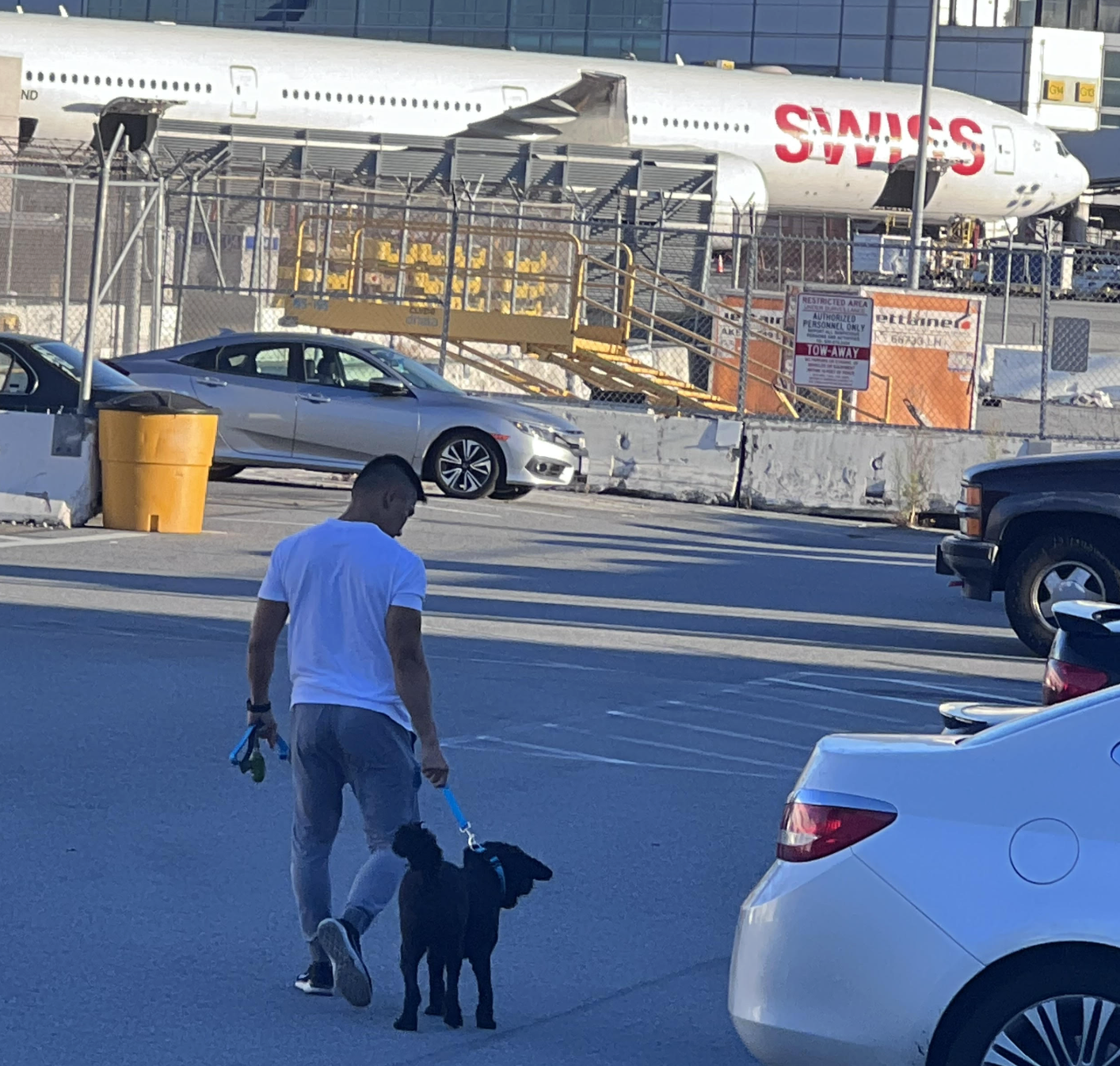
On the California side, we had to pick him up from the airline’s cargo terminal near the airport rather than from the main passenger arrivals area. That involved:
- Driving to the airline’s cargo warehouse area at the edge of the airport.
- Presenting identification and the dog’s paperwork at a small office.
- Settling any customs-related formalities and fees before the crate was released.
The cargo handler had given us a simple checklist in advance: arrive at the cargo warehouse roughly an hour after landing, bring government ID, expect to pay an import handling fee, and plan on visiting a nearby customs office before the dog could be released. The reality felt more stressful than the checklist suggested: we first filled out forms with the cargo staff, then took that paperwork to a different building where a customs officer in uniform asked a long series of questions before signing and stamping the documents. Only then could we return to the original office, where staff disappeared into the warehouse to “locate a live dog”.
After a wait that felt much longer than it probably was, the crate finally appeared on a forklift, emerging from the dim light of the warehouse. Looking into the crate from the outside, we could barely see anything at first except the small white goatee on his otherwise dark fur. Seeing that patch of white move was the moment of real relief: he was tired, wired, thirsty, but very much alive and in one piece. He had not soiled the crate, which we took as a sign of both good preparation and a fairly calm temperament under stress.
Lessons Learned and Practical Tips
- Start earlier than you think. Finding a vet and aligning paperwork with flight timing takes weeks.
- Read official sources first. Then use forums or blogs only to fill in colour, not to replace the rules.
- Airline policies can be stricter than government rules. Always check both and keep printed copies with you.
- Think about stress and temperature. One long flight may be kinder than multiple shorter legs and transfers, but avoid extreme heat.
- Be extra cautious with snub-nosed breeds. Many airlines will not carry them in the hold at all because of breathing and heat risks, even if they are technically allowed to fly.
- Budget realistically. Between vet, paperwork, crate, and cargo fees, the total cost can easily reach around €2,000–€2,500 or the equivalent in dollars, plus destination handling and customs.
- Plan for pickup logistics. Cargo terminals are often in industrial areas with limited signage. Know where you are going before you land.
If you want a compact version of this process to work through step by step, see the battle plan checklist for moving a dog from Europe to the United States.
FAQ
Do I need a pet relocation service?
We handled our move directly with a vet and the airline’s cargo department, but pet relocation services can simplify logistics, especially for complex routes or if you are unable to coordinate from abroad. They add cost but may reduce stress, particularly if you are moving multiple animals or changing planes.
Can I sedate my dog for the flight?
Many vets advise against sedating dogs for air travel because of risks related to temperature, blood pressure, and balance. Discuss this directly with your own vet rather than relying on generic advice. In our case, we did not sedate our dog and focused instead on crate training and scheduling the flight to avoid extreme heat.
Where can I find the latest rules?
Start with official government sites. For example:
- CDC – dogs entering the United States .
- USDA APHIS – pets travelling to the U.S. .
- California entry requirements for dogs , or your own state’s animal health department.
- Ireland’s pet travel portal and the UK government pet travel guidance for export rules.
- Your chosen airline’s cargo or pet travel information page.
Policies can change quickly, especially around disease outbreaks, so always rely on those sources for the final word.